
Inner Knee Pain: Causes, Location, Symptoms & Best Treatment (Complete Guide)
Do you feel pain on inner side of knee during everyday movements? It can be frustrating when simple actions like walking or bending become uncomfortable. Inner knee pain may develop gradually or appear suddenly. Often described as knee pain inner side or inner side knee pain, the discomfort can range from mild to severe and may worsen as inner knee pain when bending or climbing stairs. Identifying the exact cause is essential; this often involves using tools such as an inner knee pain location chart and closely evaluating symptoms to pinpoint the source of the pain.
One of the best knee surgeons in Dubai, Dr. Mohamed Elfekky, focuses on identifying the exact cause by using tools such as an inner-knee pain location chart and by evaluating symptoms. He then provides targeted inner knee pain treatment, including personalized plans to restore function and reduce pain.
Understanding Inner Knee Pain & the Inner Knee Pain Location Chart
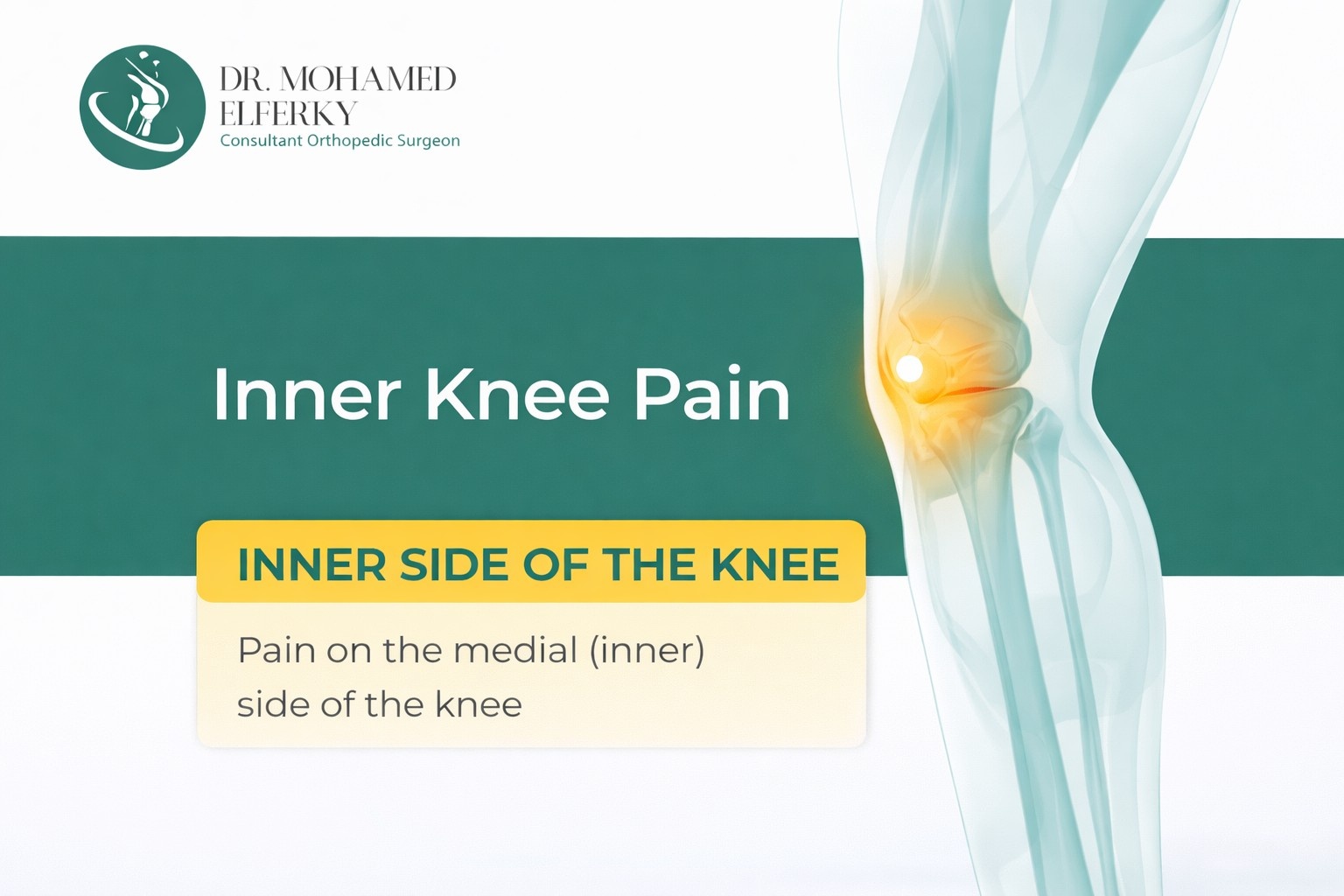
The inner side knee pain location chart helps identify exactly where discomfort originates. The inner side, medically called the medial side, refers to the side of the knee closest to the opposite knee. Pain here may involve structures such as the medial collateral ligament (MCL), meniscus cartilage, bursae (fluid sacs), tendons, and joint surfaces.
A typical inner knee pain location map includes:
-
Pain right along the inner joint line
-
Just below the knee toward the shin
-
Slightly above the knee toward the inner thigh
-
Pain that increases with bending or weight‑bearing motions
Knowing the exact location of your pain helps doctors figure out the likely cause and choose the best treatment.
Common causes of Inner Side Knee Pain
Injuries, overuse, or normal wear and tear can all cause inner knee pain. The most common causes include:
-
Medial Collateral Ligament (MCL) Injuries
The MCL plays an important role in keeping your knee stable and preventing it from bending inward too much. It can be stretched or torn during sudden twists, direct impacts, or intense physical activity, which is quite common in sports. When this happens, you may feel pain along the inner side of your knee, along with swelling and a sense that the knee isn’t as stable as it should be.
-
Medial Meniscus Tears
The meniscus is cartilage that cushions your knee joint. Twisting, stopping suddenly, or forcefully bending your knee can tear it. This often leads to deep pain in the inner knee, along with locking, clicking, or trouble fully extending your knee.
-
Pes Anserine Bursitis & Tendon Irritation
When the bursa or nearby tendons on the inner knee become inflamed, you may feel pain in a specific spot, especially when climbing stairs, running, or bending your knee. Doing the same movements over and over is a common cause.
-
Medial Plica Syndrome
A plica is a fold in the lining of your knee. Overuse or repetitive movements can cause inflammation, leading to pain on the inner side of your knee that worsens with activity.
-
Osteoarthritis & Degenerative Changes
Over time, wear and tear on your knee joint, especially as you get older, can break down cartilage. This leads to ongoing inner knee pain, stiffness, and reduced movement.
-
Overuse and Activity‑Related Strain
Frequent knee bending, lots of running, or movements that put extra stress on your knee can strain the inner side over time. This may cause pain or swelling.
Common symptoms of Inner Knee Pain
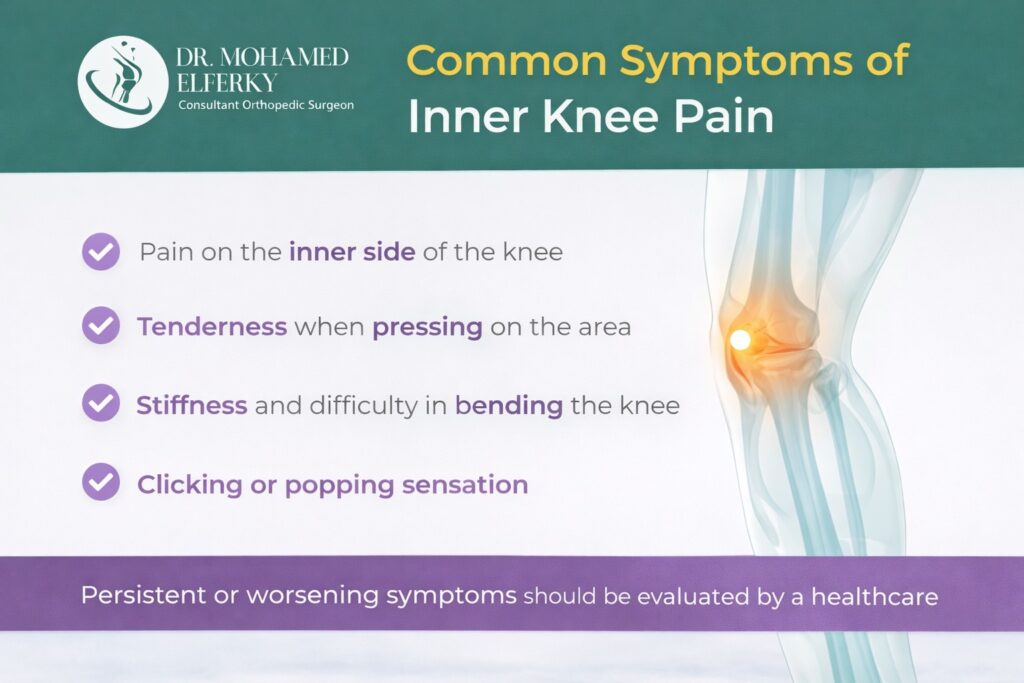
Everyone experiences pain differently, but common symptoms include:
-
Sharp or dull aching pain on the inner knee edge or just below it
-
Pain during bending or straightening the knee (inner knee pain when bending)
-
Swelling, warmth, or tenderness in the affected area
-
Instability or locking pain with sudden movements
-
Pain that increases with certain activities, like inner knee pain running, or climbing stairs
Telling your doctor if your pain is sharp, stabbing, dull, or aching can help them figure out the cause.
How is the diagnosis made?
Accurate diagnosis is essential to effective inner knee pain treatment. A specialist will typically use:
-
Medical History & Symptom Review
Your doctor will ask when your pain began, what makes it worse, and if you’ve had any injuries.
-
Physical Examination
During the exam, your doctor will see how your knee moves, look for sore spots, test your ligaments for stability, and check for swelling.
-
Imaging Tests
-
X‑rays show bone alignment and arthritis.
-
MRI scans reveal soft tissue detail (meniscus, ligaments, tendons)
-
Ultrasound may detect bursitis or fluid buildup.
This careful process helps ensure your treatment targets the true cause of your pain.
Inner Knee Pain Treatment Options
Treatment depends on how severe your pain is, what’s causing it, and your health goals. Many people improve with simple, non-surgical care:
Conservative First‑Aid Care
-
Rest from aggravating movements.
-
Ice & compression to reduce inflammation
-
Elevation to control swelling.
These basic steps can help relieve symptoms, especially if your pain is recent or mild.
Strengthening & Mobility Movements
Safe, targeted exercises are important for strengthening your knee and easing pain. Examples include:
- Straight leg raises to activate quadriceps.
- Quadriceps and hamstring strengthening for stabilizing support
- Gentle cycling or stationary bike work to improve range without impact
- Half squats (moderate range) to build lower‑limb strength while protecting the joint.
If your pain gets worse, stop immediately. A specialist or physical therapist can help you safely adjust your exercises.
Advanced Surgical Techniques and Cryoablation for Inner Knee Pain
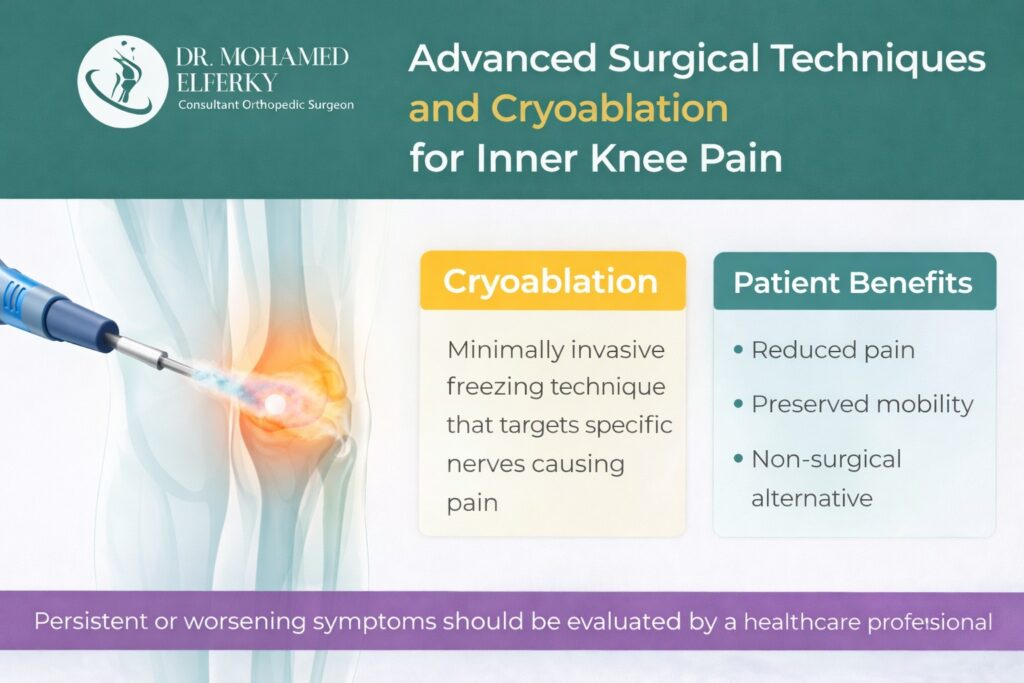
Dr. Mohamed Elfekky offers innovative solutions for patients with persistent inner knee pain, including cryoablation, a minimally invasive procedure that targets pain-transmitting nerves for long-lasting relief and improved function. Modern surgical methods and tissue-preserving techniques make knee surgery more effective and less painful for those with inner side knee pain.
Regional Nerve Blocks & Local Anesthetics
Femoral, adductor canal, and sciatic nerve blocks, as well as local anesthetic injections, to manage pain after surgery. These methods let patients begin gentle movement and knee exercises earlier, making it less inner knee pain when bending and helping recovery go more smoothly.
Medication Management
Doctors usually suggest non-opioid medicines like NSAIDs, acetaminophen, and gabapentinoids to manage pain and swelling. Opioids are only used when necessary and for a short period.
Cryotherapy & Early Physical Therapy
Using cold therapy along with elevation and compression helps decrease swelling, calm nerves, and promote faster recovery. Starting rehabilitation early with targeted inner knee pain exercises can help you build muscle strength, maintain flexibility, and reduce the need for pain medication.
Psychological Support
Focusing on mental well-being through counseling, mindfulness, and goal-setting can help patients manage inner knee pain while running or going about daily life. This approach can also support better recovery.
Who should seek medical care?
You should seek medical care if you notice any of these:
-
Pain lasts more than a few days or increases.
-
The knee locks, gives way, or swells significantly.
You can’t bear weight or extend the knee.
Seeing a doctor promptly can prevent long-term damage and help you recover more fully.
Why choose Dr. Mohamed Elfekky
Inner knee pain can result from various causes, including injuries or joint degeneration, and identifying the source is essential for effective care. With an accurate diagnosis, targeted inner knee pain exercises, and personalized inner knee pain treatment, most patients can return to active, pain-free movement.
If your inner knee pain persists or affects your daily life, consult an orthopedic specialist like Dr. Mohamed Elfekky for expert guidance and lasting relief. Book your consultation today to take the first step toward better knee health.
FAQs
What causes inner knee pain or pain on inner side of knee?
Inner knee pain often happens because of MCL injuries, meniscus tears, bursitis, arthritis, or overuse. Finding the exact cause helps you get the right treatment.
What does an inner knee pain location chart show?
An inner knee pain location chart shows exactly where the pain is, such as along the joint line, below the knee, or toward the inner thigh. This helps doctors diagnose the problem more accurately.
Why do I feel inner knee pain when bending?
If you feel inner knee pain when bending, it could be from a meniscus tear, ligament strain, or inflammation. The pain often gets worse when you squat or climb stairs.
Can running cause inner knee pain?
Yes, it’s common to get inner knee pain from running. This can happen because of overuse, poor alignment, or muscle imbalance, which puts extra stress on the inside of your knee.
What are the best inner knee pain exercises?
Good exercises for inner knee pain are straight leg raises, gentle squats, and moves that strengthen your quadriceps and hamstrings to support your knee.
What is the best inner knee pain treatment?
Treatment for inner knee pain depends on what’s causing it. Options may include rest, physiotherapy, medication, or sometimes advanced treatments like minimally invasive procedures.
About Doctors
Dr Mohamed Elfekky, Orthopedic Surgeon in Dubai, is a trusted expert in knee and joint care with over 25 years of experience in advanced, minimally invasive, and robotic-assisted surgeries. Read more