
Knee Pain Location Chart: What Your Pain Location Means & Causes
Knee pain is a common problem for people of all ages, whether you are an athlete or just feel discomfort during daily activities like walking, climbing stairs, or exercising. Knowing exactly where your knee hurts can help identify the cause.
Dr. Mohamed Elfekky emphasises that a knee pain location chart can show you exactly where the pain is, making it easier to find the right diagnosis and treatment. Understanding your knee pain chart, knee pain location, and causes is the first step to feeling better and moving more easily.
Why pain location matters
The knee is a highly intricate joint made up of several interconnected structures, like bones, cartilage, tendons, ligaments, and small fluid-filled sacs called bursae. Since so many parts are close together, pain can come from different sources depending on where it is. A knee pain map or knee pain diagram helps doctors figure out what does knee pain location means and choose the best treatment.
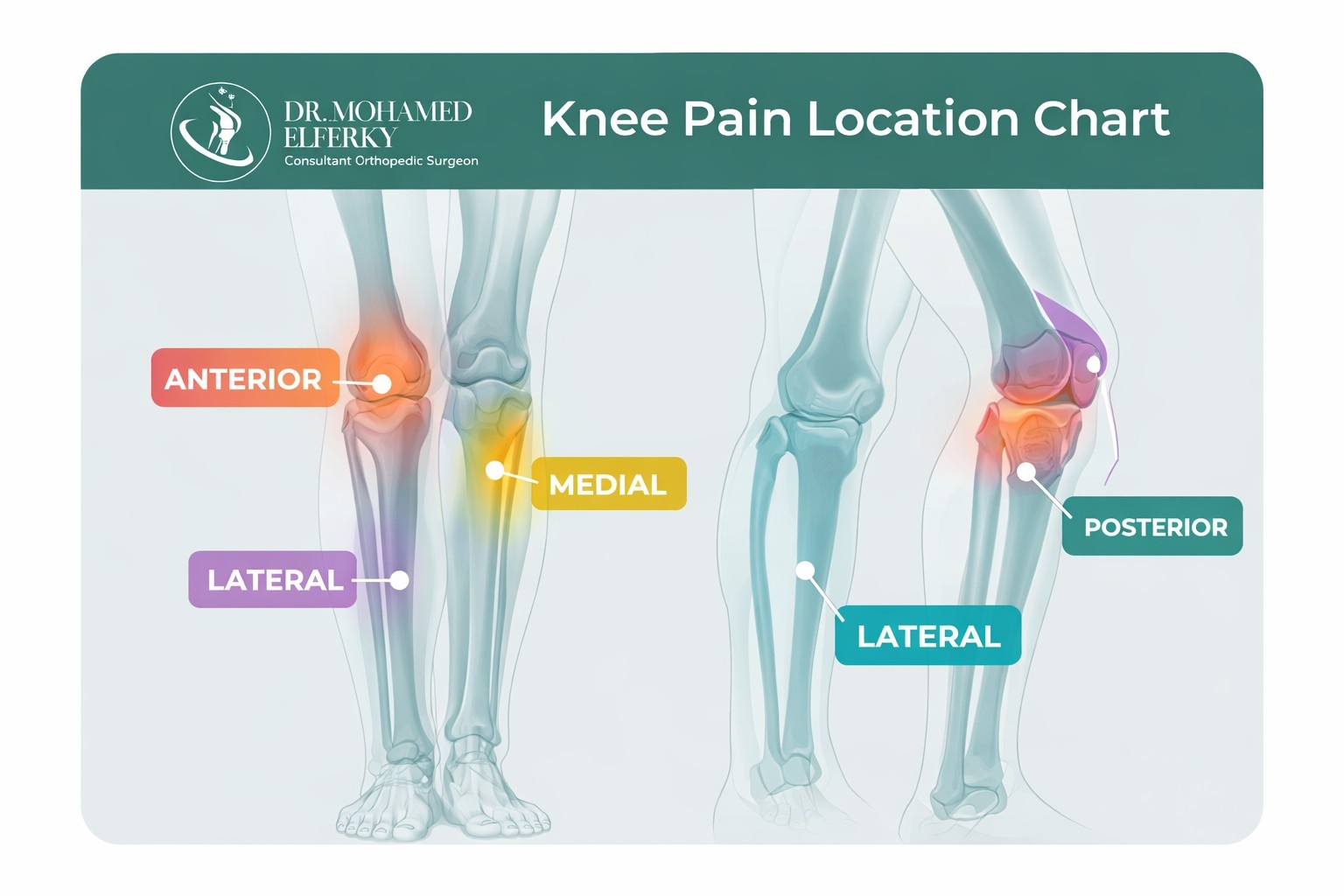
Front of the knee (anterior pain)
Pain at the front of the knee, around or beneath the kneecap, is one of the most common areas highlighted in a knee pain diagram. Causes include:
- Patellofemoral Pain Syndrome (“runner’s knee”) is often due to the kneecap not tracking properly.
- Patellar tendonitis occurs when the tendon linking the kneecap to the shinbone becomes inflamed.
- Chondromalacia Patellae, where cartilage under the kneecap softens or deteriorates.
- Prepatellar Bursitis, inflammation from repeated kneeling or pressure.
Inner knee pain (medial pain)
Pain on the inside of the knee, seen in an inner knee pain location chart can indicate:
- Medial Collateral Ligament (MCL) Injury from twisting or impact
- Meniscus knee pain location chart Tears affect the cartilage cushions of the knee.
- Pes Anserine Bursitis, which is inflammation where tendons attach to the inner knee
- Early-stage arthritis or cartilage degeneration
Outer knee pain (lateral pain)
Pain on the outside of the knee may be caused by:
- Iliotibial Band Syndrome (ITBS) causes friction on the lateral knee.
- Lateral Meniscus Tears
- Lateral Collateral Ligament (LCL) Injuries
- Arthritis or minor contusions
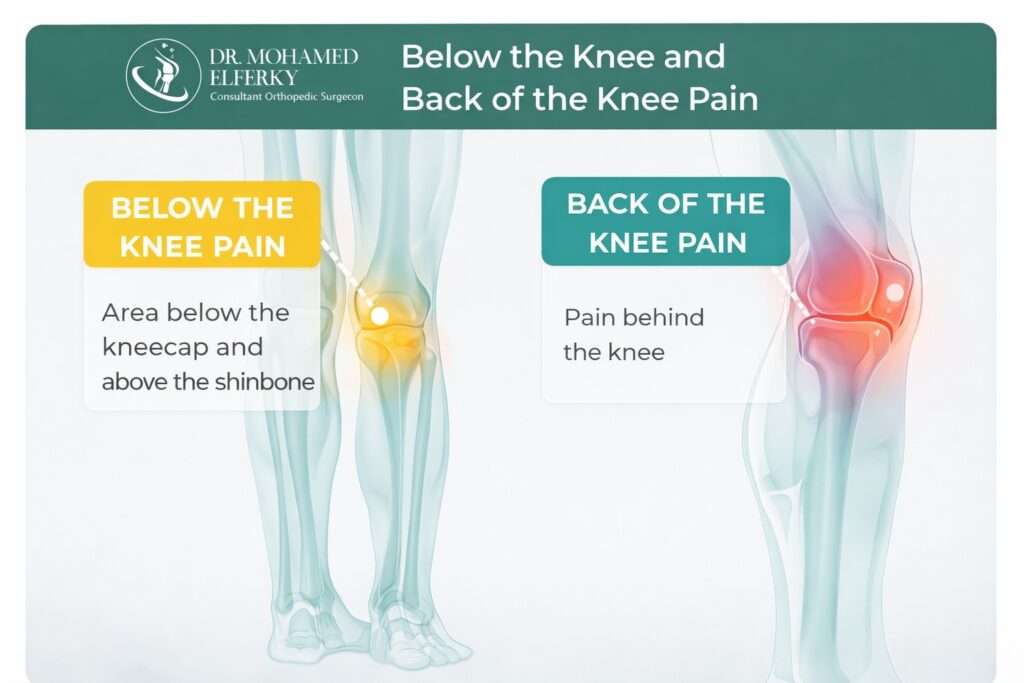
Below the knee and back of the knee pain
- Pain felt just beneath the kneecap can indicate patellar tendonitis or Osgood-Schlatter disease.
- Pain behind the knee, shown in a back knee pain location chart or knee pain location chart back, may signal a Baker’s cyst, hamstring or calf strains, or posterior ligament/tendon injuries.
Knee injury and chronic conditions
A knee injury, like an ACL tear or fracture, can affect several parts of the knee. Long-term conditions like osteoarthritis can lead to ongoing pain throughout the joint. A knee pain chart can help identify these problems more quickly and accurately.
When to seek medical evaluation
Slight knee pain can often be managed at home with simple self-care measures, but you should see a specialist if:
- Pain persists or worsens over time.
- You can’t bear weight on the knee.
- Swelling, redness, or warmth appear.
- You hear popping or feel instability.
A trained clinician, such as Dr. Elfekky, will look at your pain location, symptoms, and activity history to create a treatment plan for you. This may include physical rehabilitation or advanced treatments like cryoablation.
Modern pain management after knee surgery
For people having knee surgery, managing pain well is very important. Pain management after knee surgery has advanced significantly under the care of Dr. Mohamed Elfekky, with a strong focus on safer, more targeted methods rather than relying solely on opioids.
Advanced Surgical Techniques and Cryoablation
Dr. Mohamed Elfekky also offers new treatments, like cryoablation treatment for people with ongoing knee pain after surgery. This minimally invasive procedure targets the nerves that send pain signals, giving long-lasting relief and better function. New surgical methods, nerve treatments, and techniques that protect tissue have made knee surgery less painful and more effective.
- Regional Nerve Blocks
Nerve blocks are injections given before or during surgery that target the nerves in the knee. Common types are femoral, adductor canal, and sciatic nerve blocks. They can provide pain relief for 24 to 48 hours and help you start moving sooner.
-
Local Anesthetic Injections
Local anesthetics is used around the knee during surgery. This reduces pain after the operation and helps patients start gentle rehabilitation earlier.
-
Non-Opioid Medications
Medicines like NSAIDs, acetaminophen, and gabapentinoids are now the main choices for controlling pain and inflammation. They help reduce the need for opioids.
-
Opioids – Used Sparingly
Dr. Elfekky give opioids only when needed and for a short period because these medicines can cause side effects and might lead to dependence.
-
Cryotherapy and Ice Applications
Cryotherapy, also called cold therapy, helps reduce inflammation, calm nerves, and lower swelling. Using it with elevation and compression can help you recover faster and feel more comfortable.
-
Physical Therapy
Starting rehab soon after surgery, often on the first day, can improve blood flow, keep your joints flexible, strengthen your muscles, and lower your need for pain medicine.
-
Psychological Support
Your mental health can change how you feel pain. Support such as counseling, mindfulness, breathing exercises, and setting realistic goals can help you recover and manage pain better.
Why using a Knee Pain Location Chart Matters
A knee pain location chart serves as a roadmap, helping patients and clinicians identify potential causes of discomfort. By understanding what does knee pain location mean, individuals can receive accurate diagnosis, tailored treatments, and targeted interventions, whether through physical therapy, cryotherapy, or advanced procedures like cryoablation.
Why choose Dr. Mohamed Elfekky
A Knee Pain Location Chart, including inner, outer, anterior, posterior, and below-the-knee pain, provides essential guidance in diagnosing and treating knee discomfort. Understanding the knee pain chart knee pain location and causes allows patients to access the right care faster. With a combination of modern pain management strategies, cryotherapy, physical therapy, and advanced treatments like cryoablation, Dr. Mohamed Elfekky helps patients regain mobility, reduce pain, and improve overall quality of life.
For anyone experiencing persistent knee pain, a detailed knee pain map can be the first step toward finding relief and restoring function safely and effectively. Book a consultation today with Dr. Mohamed Elfekky.
About Doctors
Dr Mohamed Elfekky, Orthopedic Surgeon in Dubai, is a trusted expert in knee and joint care with over 25 years of experience in advanced, minimally invasive, and robotic-assisted surgeries. Read more