

Top 5 Mistakes After Knee Replacement to Avoid
Knee arthroplasty, also known as Knee replacement surgery, is a procedure where damaged parts of the knee are replaced with artificial components. Dr. Mohamed Elfekky usually suggests this surgery for people with knee cartilage wear, osteoarthritis, or injuries to the knee. In addition to restoring mobility, knee replacement surgery provides significant pain relief, helping patients return to daily activities more comfortably.
Achieving a smooth recovery requires proper post-surgery care and awareness of common mistakes after knee replacement surgery. Knowing the top five mistakes people make after knee replacement can help you recover better, and prevent complications such as infections, limited mobility, and other problems after knee replacement surgery. Dr. Mohamed Elfekky, a leading orthopedic surgeon, focuses on personalized care, guiding patients through every stage of recovery to minimize risks and optimize outcomes.
What is the importance of post-surgery care?
A successful knee replacement recovery involves more than just rest and elevation. Several key components help restore mobility while reducing knee replacement recovery mistakes. Under the care of Dr. Mohamed Elfekky, patients receive a customized plan that addresses their individual needs:
Physical Therapy: Regular exercises improve joint flexibility, strengthen surrounding muscles, and prevent stiffness or atrophy. Skipping therapy is one of the things to avoid after knee replacement, and Dr. Mohamed Elfekky ensures patients understand the importance of consistent physiotherapy.
Pain Management: Proper pain control, whether through medications or alternative methods, helps patients engage in rehabilitation exercises. Following prescribed medications reduces inflammation and prevents complications such as blood clots, making this an essential precaution during knee replacement recovery.
Compression Therapy and Circulation Support: Techniques such as compression and targeted movement help reduce swelling and improve circulation, addressing slow recovery after knee replacement causes.
Assistive Devices: Walkers, crutches, or canes may be recommended to maintain balance and prevent falls during early recovery. Dr. Mohamed Elfekky customizes the use of these devices to each patient’s activity level, forming part of essential knee replacement recovery tips.
Pre-Habilitation: preparing for surgery
Pre-habilitation, or pre-hab, is another way Dr. Mohamed Elfekky stands out. Pre-hab means doing exercises before surgery to strengthen the muscles around your knee, which helps you recover more smoothly. Dr. Mohamed Elfekky integrates pre-hab into treatment plans to minimize the top 5 mistakes after partial knee replacement and improve overall outcomes.
Pre-hab helps patients recover faster after knee replacement, minimizes hospital time, and reduces the risk of post-surgical complications.
Top 5 Mistakes after Knee Replacement to avoid
Knee replacement surgery can dramatically improve the quality of life by relieving pain and restoring mobility. However, recovery is just as important as the surgery itself. Many patients make errors during the healing process that can slow progress or cause complications.
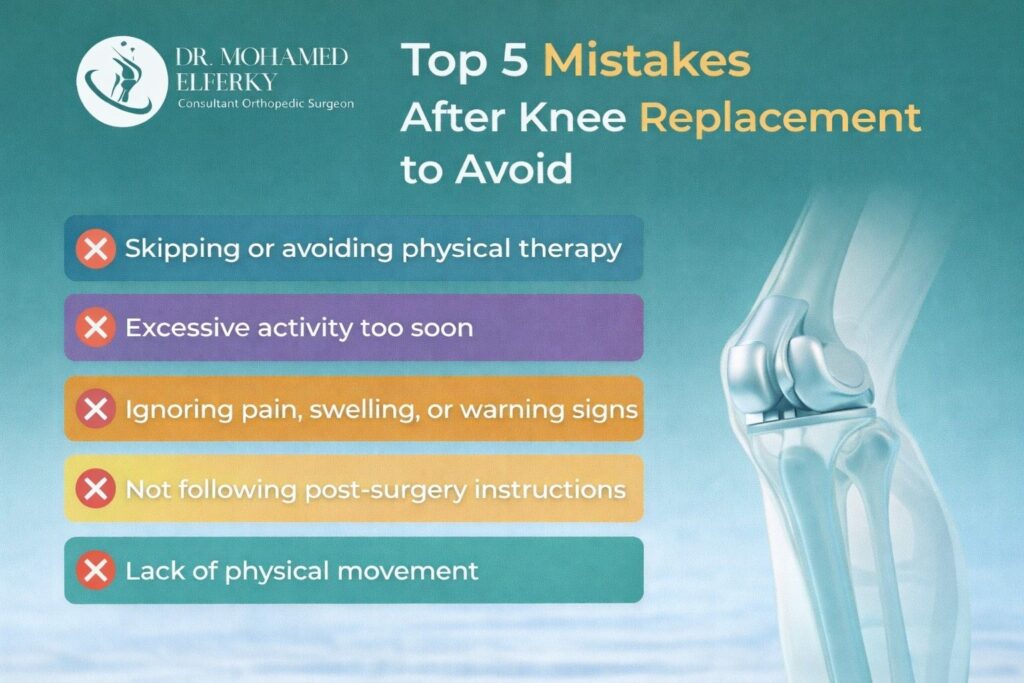
Understanding the top 5 mistakes after knee replacement surgery can help you recover safely and regain normal function faster. Whether you’ve had a total or partial knee replacement, knowing what not to do after knee replacement surgery can significantly impact your recovery. Dr. Mohamed Elfekky provides clear guidance on these common pitfalls and how to avoid them:
1. Skipping or avoiding physical therapy
Neglecting physical therapy is one of the most common mistakes in knee replacement recovery. While resting the knee is important initially, rehabilitation exercises are critical to restoring strength, flexibility, and mobility.
If you skip therapy or don’t do your exercises at home, your knee can get stiff, and you might not be able to move it as well.
Knee replacement recovery tips from Dr. Mohamed Elfekky:
Attend all scheduled physiotherapy sessions.
Perform daily home exercises as instructed.
Gradually increase movement to regain flexibility.
A consistent rehabilitation plan is key to staying on track with your knee replacement recovery timeline.
2. Excessive activity too soon
Although movement is necessary, overexerting yourself too early after knee replacement surgery is a common mistake. Many patients feel better a few weeks after surgery and try to resume normal activities too quickly.
Pushing the knee too hard before it fully heals can cause swelling, pain, or injury.
Activities to avoid after knee replacement in early recovery:
- Running or jumping
- Heavy lifting
- High-impact sports
- Long periods of standing or walking
Pacing yourself and gradually increasing activity are important knee replacement recovery precautions, which Dr. Mohamed Elfekky emphasizes for each patient.
3. Ignoring pain, swelling, or warning signs
Some discomfort and mild swelling are normal after surgery, but ignoring persistent pain or swelling can lead to complications.
This is a common issue in both total and partial knee replacements, and is one of the top 5 mistakes after partial knee replacement.
Potential problems after knee replacement surgery include:
- Infection
- Blood clots
- Implant issues
- Excessive inflammation
If you notice severe swelling, redness, fever, or sudden pain, contact your orthopedic surgeon promptly. Dr. Mohamed Elfekky stresses the importance of monitoring symptoms to prevent serious complications.
4. Not following post-surgery instructions
After knee replacement surgery, your doctor will provide instructions on wound care, medications, activity restrictions, and lifestyle adjustments. Ignoring these guidelines is another frequent mistake after knee replacement surgery.
Important knee replacement recovery precautions include:
Keeping the surgical wound clean and dry
Taking medications exactly as prescribed
Attending follow-up appointments
Using assistive devices as recommended
Listening to your surgeon’s instructions helps you recover faster and more safely. Dr. Mohamed Elfekky creates a recovery plan for each patient to get the best results.
5. Lack of physical movement
While excessive activity can be harmful, complete inactivity can also hinder recovery. Staying in bed too long may cause stiffness, muscle weakness, and poor circulation, one of the often-overlooked slow recovery after knee replacement causes.
Helpful knee replacement recovery tips:
Walk short distances daily.
Perform gentle stretching exercises.
Keep the leg elevated when resting.
Apply ice to reduce swelling.
Balanced movement helps maintain joint flexibility and supports how to recover faster after knee replacement, which Dr. Mohamed Elfekky emphasizes as part of his personalized patient guidance.
Understanding the knee replacement recovery timeline
Recovery times can be different for everyone, but most people follow a general pattern:
Pre-surgery preparation: Dr. Mohamed Elfekky conducts health evaluations to ensure you are fit for surgery and to minimize problems after knee replacement surgery and knee replacement recovery mistakes.
Post-operative care: Pain is managed with medication, and patients are guided on what not to do after knee replacement surgery and things to avoid after knee replacement.
Early movement: Physical therapy usually begins within 24 hours to improve mobility and prevent slow recovery after knee replacement causes.
Hospital stay: The knee replacement recovery timeline in the hospital is typically 1–3 days for total knee replacement, while partial knee replacement usually requires a shorter stay.
Home rehabilitation: A personalized exercise plan supports healing and helps avoid common mistakes after knee replacement surgery.
Activity precautions: Patients should follow knee replacement recovery precautions and avoid high-impact activities to avoid after knee replacement.
Recovery period:
Total knee replacement: Normal activities in 6–12 weeks, full recovery up to 1 year.
Partial knee replacement: Recovery is often 3–6 weeks.
- Avoiding mistakes: Knowing the top 5 mistakes after knee replacement, including top 5 mistakes after knee replacement surgery and top 5 mistakes after partial knee replacement, helps patients understand mistakes to avoid after knee replacement and how to recover faster after knee replacement.
Why choose Dr. Mohamed Elfekky
Recovering from knee replacement surgery involves patience, disciplined rehabilitation, and careful adherence to medical guidance. Avoiding the top 5 mistakes after knee replacement helps prevent complications and ensures better long-term results.
By following proper knee replacement recovery tips and taking advice from Dr. Mohamed Elfekky, patients receive expert guidance on what not to do after knee replacement surgery, ensuring a safer and faster recovery and a return to an active, pain-free life.
About Doctors
Dr Mohamed Elfekky, Orthopedic Surgeon in Dubai, is a trusted expert in knee and joint care with over 25 years of experience in advanced, minimally invasive, and robotic-assisted surgeries. Read more
Social link
Recent Blog
Sudden Knee Pain: Causes, Symptoms & When It’s Serious
Sudden Knee Pain: Causes, Symptoms & When It’s Serious Experiencing

Knee Pain in Ladies: Causes, Symptoms & Treatment Guide
Knee Pain in Ladies: Causes, Symptoms & Treatment Guide Knee
