

Can you get arthritis in your 20s? | Causes, Symptoms & Early Treatments in Dubai
Can you get arthritis in your 20s?
While arthritis is often thought of as an older adult condition, early onset arthritis can affect young adults, causing joint pain, stiffness, and fatigue.
Understanding the causes, recognizing the symptoms, and seeking early treatments can help manage the condition effectively and maintain an active lifestyle.
Understanding arthritis in young adults
Young adult arthritis, also known as arthritis in twenties, occurs when inflammation affects the joints much earlier than expected. It can develop due to autoimmune disorders, past injuries, or even genetic factors.
Unlike age-related arthritis, which is usually linked to long-term wear and tear, early onset arthritis often stems from immune system dysfunction or trauma to the joints.
In young adults, arthritis can impact various joints, including the knees, hips, hands, and even smaller joints like the thumbs. Persistent pain, morning stiffness, and fatigue can interfere with work, exercise, and daily routines.
However, with early diagnosis, lifestyle adjustments, and modern treatment options, most individuals can successfully control symptoms and protect joint health for the long term.

Can you get arthritis in your 20s in specific joints?
Yes — you can get arthritis in your 20s, affecting different joints throughout the body.
Early onset arthritis doesn’t target just one area; depending on its cause, it may appear in the hands, knees, hips, or even smaller joints like the thumb. Each joint may show different signs and challenges, but early recognition can help prevent long-term damage.
Can you get knee arthritis in your 20s?
Knee arthritis is one of the more common types of young adult arthritis, often linked to past injuries, sports strain, or genetic predisposition. Pain during movement, swelling, and stiffness are typical signs, and if untreated, it may limit mobility over time.
Causes of early onset arthritis
Early onset arthritis in your 20s can result from a mix of genetic, lifestyle, and environmental factors.
Here are some of the main causes of young adult arthritis:
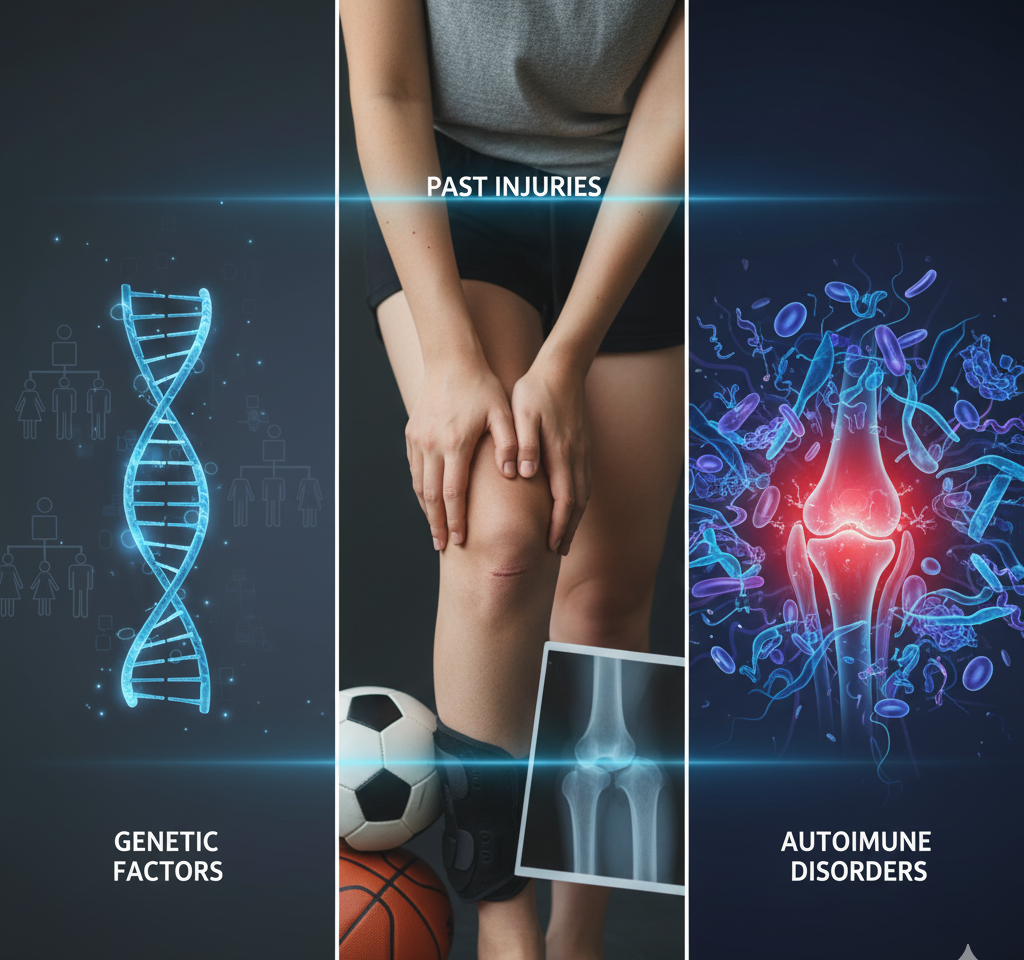
- Genetic factors: Having a family history of arthritis increases your risk of developing joint problems early.
- Autoimmune disorders: Conditions like rheumatoid arthritis or lupus can trigger the immune system to attack joint tissues.
- Previous injuries: Sports injuries or joint trauma can lead to post-traumatic arthritis in your knees, hips, or hands.
- Repetitive stress: Overuse from typing, texting, or physical work can cause hand or thumb arthritis in your 20s.
- Lifestyle habits: Obesity, poor posture, and lack of exercise put extra strain on joints.
- Infections or metabolic issues: Certain infections or gout can trigger joint inflammation in young adults.
- Hormonal or environmental triggers: Smoking, stress, or hormonal changes may worsen inflammation.
Symptoms of arthritis in young adults
- Joint pain: Persistent aching or soreness in joints like the knees, hips, or hands.
- Stiffness: Especially noticeable in the morning or after sitting for long periods.
- Swelling: Visible inflammation or puffiness around the affected joints.
- Fatigue: Constant tiredness or low energy due to ongoing inflammation.
- Reduced mobility: Difficulty bending, walking, or gripping objects.
- Warmth or tenderness: Joints may feel warm to the touch or painful during use.
- Clicking or popping sound: A feeling or sound of joints rubbing together.
If you experience these symptoms in your 20s, don’t ignore them. Early evaluation can help identify early onset arthritis and allow specialists to recommend effective treatment to control pain and preserve joint health.
Diagnosis of arthritis in the 20s
Diagnosing arthritis in your 20s can be challenging since symptoms may resemble fatigue, injury, or overuse. However, early and accurate diagnosis is essential to manage early onset arthritis and prevent joint damage.
- Medical history: Discussion of symptoms, family history, and lifestyle factors.
- Physical examination: Checking for swelling, tenderness, and range of motion.
- Blood tests: Detecting inflammation markers or autoimmune activity (useful for rheumatoid arthritis).
- Imaging tests: X-rays, MRI, or ultrasound to spot cartilage loss or bone changes.
- Joint fluid analysis: In some cases, a small sample of joint fluid is tested to rule out infection or gout.
Early arthritis treatments and management options
- Medications: Nonsteroidal anti-inflammatory drugs (NSAIDs) and analgesics help relieve pain and reduce inflammation.
- Corticosteroids: Oral or injectable steroids reduce joint swelling and quickly control acute flare-ups.
- Physical therapy: Customized physiotherapy programs improve joint strength, flexibility, and range of motion—crucial for maintaining function and preventing stiffness.
- Assistive devices: Braces, orthotics, or canes can ease joint pressure and support movement.
- Cryoablation therapy for arthritis: Minimally invasive treatment that targets the sensory nerves responsible for arthritis pain — helping patients regain comfort and mobility without surgery.
- Lifestyle changes: Adopting a joint-friendly lifestyle—losing excess weight, following an anti-inflammatory diet, and incorporating low-impact exercise—can dramatically ease symptoms and slow arthritis progression.

Living with early onset arthritis
Living with young adult arthritis can be challenging, but with proper management, it’s possible to maintain an active and fulfilling lifestyle. Arthritis in twenties doesn’t have to limit your daily activities if you adopt strategies to protect your joints and reduce pain.
- Stay active: Try low-impact exercises like swimming, cycling, or yoga.
- Protect joints: Use braces or ergonomic tools to reduce stress.
- Manage pain: Follow medications and consider arthritis treatment or Cryoablation therapy.
- Healthy lifestyle: Maintain diet, weight, and avoid repetitive strain.
- Rest wisely: Balance activity with adequate rest to prevent flare-ups.
- Mental well-being: Seek counseling, support groups, or peer connections.
FAQs -
Can you really get arthritis in your 20s?
Yes, early onset arthritis can affect young adults. Arthritis in twenties may appear due to autoimmune conditions, injuries, or genetic factors.
What causes arthritis at a young age?
Causes of arthritis in twenties include genetics, autoimmune disorders like rheumatoid arthritis, joint injuries, repetitive stress, and lifestyle factors such as obesity or sedentary habits.
Can you get rheumatoid arthritis in your 20s?
Yes, rheumatoid arthritis in your 20s is possible. It’s an autoimmune disease affecting multiple joints, often including hands, wrists, and knees.
Can lifestyle changes help prevent arthritis in young adults?
Yes. Maintaining a healthy weight, following an anti-inflammatory diet, doing low-impact exercises, and avoiding repetitive strain can reduce the risk of arthritis in twenties.
What treatment options are available for arthritis in your 20s?
Options include medications (NSAIDs, DMARDs), physical therapy, assistive devices, lifestyle modifications, and minimally invasive procedures like Cryoablation therapy offered through Dr. Elfekky arthritis treatment.
How does Cryoablation therapy help with arthritis pain?
Cryoablation therapy for arthritis targets sensory nerves responsible for joint pain, providing long-lasting relief while preserving mobility without surgery.
When should someone in their 20s see a doctor for joint pain?
Consult a doctor if you have persistent joint pain, swelling, stiffness, or fatigue that affects daily activities, early detection is key for young adult arthritis management.
Consult Dr. Mohamed Elfekky for early onset arthritis treatment in Dubai
When it comes to arthritis treatment in Dubai, choosing the right specialist is essential for preserving joint function and improving quality of life.
Dr. Mohamed Elfekky, a trusted orthopedic and knee specialist, offers patient-centered care using advanced diagnostics, targeted therapies, and minimally invasive solutions. Combining medications, physical therapy, and lifestyle guidance, he helps young adults manage pain, maintain mobility, and slow disease progression.
Take control of your joint health—consult Dr. Mohamed Elfekky today.
About Doctors
Dr Mohamed Elfekky, Orthopedic Surgeon in Dubai, is a trusted expert in knee and joint care with over 25 years of experience in advanced, minimally invasive, and robotic-assisted surgeries. Read more
Social link
Recent Blog
Sudden Knee Pain: Causes, Symptoms & When It’s Serious
Sudden Knee Pain: Causes, Symptoms & When It’s Serious Experiencing
Knee Pain in Ladies: Causes, Symptoms & Treatment Guide
Knee Pain in Ladies: Causes, Symptoms & Treatment Guide Knee
