
Patellar Tendonitis Recovery Time — Healing Timeline & Treatment Guide
Patellar tendonitis, or jumper’s knee, is a common overuse injury affecting athletes, fitness enthusiasts, and active individuals. Patients often ask this question: What is the patellar tendonitis recovery time, and what to expect during healing?
Patellar tendonitis healing time depends on the injury, the individual’s activity level, and how they adhere to the treatment plan. In some cases, the choice between conservative care and surgery also plays a role.
When the condition is properly diagnosed and managed with a well-structured recovery program, most patients see steady improvement and are able to return safely to their usual activities or sports.
Understand the patellar tendonitis recovery timeline, from early healing to long-term recovery, what’s normal, and when to seek expert care.
What is Patellar Tendonitis and Why Does Recovery Take Time?
The patellar tendon connects your kneecap (patella) to your tibia, also known as your shinbone. The patellar tendon plays a pivotal role in our daily activities, such as walking, jumping, and running.
Microscopic tears occur due to repetitive stress, resulting in pain and inflammation. Because tendons have a limited blood supply, tendonitis recovery often takes longer than muscle injuries.
Failing to follow the recovery guidelines or returning to activity too soon can prolong the average recovery time for patellar tendonitis.
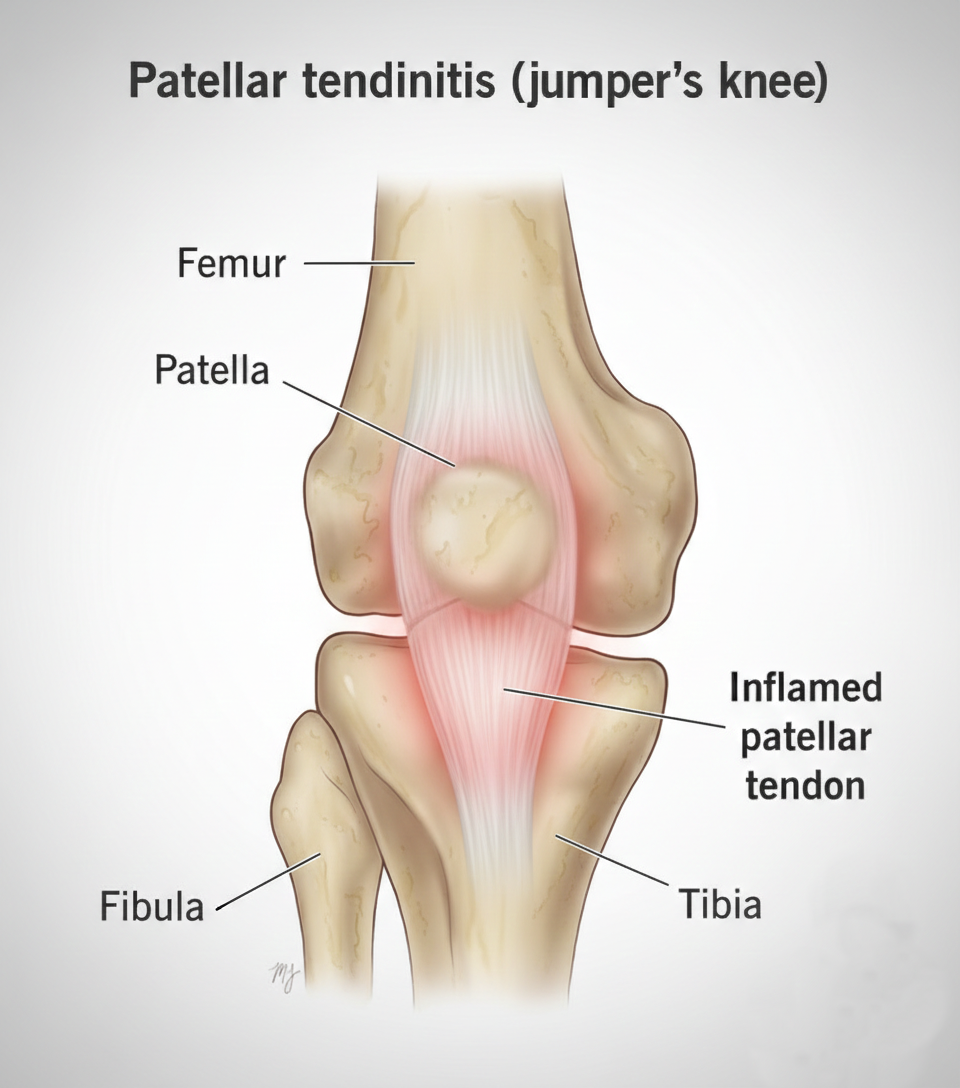
Patellar Tendonitis Recovery Timeline Weeks to Months:
Stage 1: Acute Inflammation (Weeks 1–2)
In early recovery stage, pain is usually mild to moderate and activity-related.
Typical recovery focus:
- Activity modification and rest
- Ice therapy to reduce inflammation
- Non-impact exercises
- Early physical therapy
👉 Mild cases may show improvement within 2–3 weeks.
Stage 2: Tendon Healing & Strengthening (Weeks 3–8)
At this stage, pain may decrease, but the tendon is still vulnerable.
Patellar tendonitis recovery time with physical therapy is especially important at this stage and often includes:
- Eccentric strengthening exercises
- Stretching of quadriceps and hamstrings
- Gradual load progression
👉 Most patients notice functional improvement within 6–8 weeks.
Stage 3: Functional Recovery (2–4 Months)
This is when controlled return to activity begins.
Key goals include:
- Improving tendon resilience
- Correcting biomechanical issues
- Sport-specific or activity-specific training
👉 For many, this is the typical jumper’s knee recovery time before resuming normal routines.
Stage 4: Chronic or Severe Recovery (4–12 Months)
In chronic or neglected cases, healing takes longer.
Severe patellar tendonitis recovery time may involve:
- Advanced physical therapy
- Injection-based treatments
- Shockwave or regenerative therapies
👉 Patellar tendinopathy recovery time can extend up to a year without proper care.
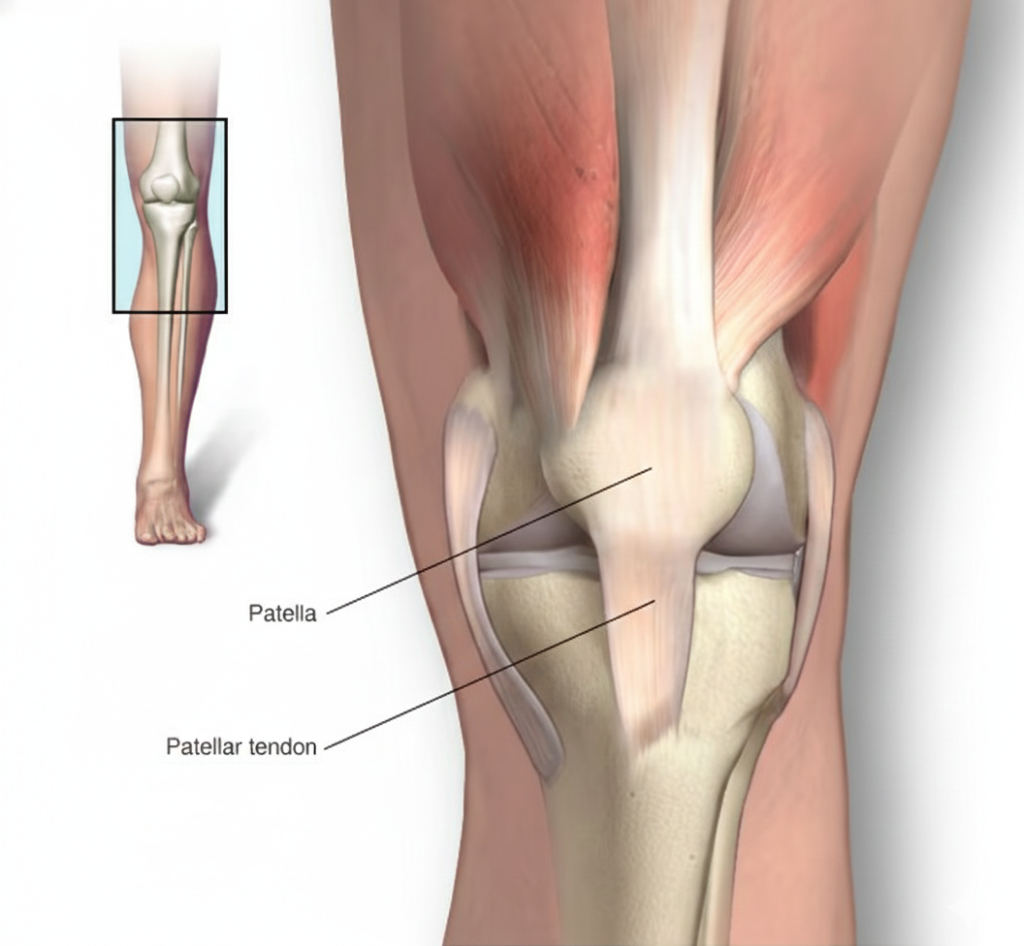
Conservative vs Surgical Patellar Tendonitis Recovery Time
Conservative Treatment Recovery
For many individuals, patellar tendonitis recovery time with physical therapy depends on consistency, proper guidance, and gradual load progression.
- Mild to moderate cases typically improve within 6 to 12 weeks.
- Chronic or long-standing cases may require 3 to 6 months of consistent care.
Treatment focuses on:
- Structured rehabilitation programs
- Pain and inflammation management
- Gradual, progressive tendon strengthening to restore function.
Surgical Recovery (When Needed)
- Surgery is considered only when symptoms persist despite an extended period of conservative treatment.
- It may be recommended if ongoing pain significantly limits daily activities or athletic performance.
Patellar tendon injury recovery after surgery may include:
- Initial protection phase (4–6 weeks)
- Structured rehab over several months
- Full recovery: 6–9 months
👉 Surgical recovery is longer but can provide relief in resistant cases.
How Long Before Running After Patellar Tendonitis?
Running too early is one of the most common reasons for delayed recovery.
Most patients can:
- Resume light jogging: 8–12 weeks (mild cases)
- Return to competitive running: 3–6 months, depending on healing and strength
A gradual, pain-free progression is key to preventing reinjury.
What Affects Patellar Tendonitis Recovery Time?
Several factors influence how long patellar tendonitis takes to heal:
- Severity and duration of injury
- Early vs delayed treatment
- Consistency with physical therapy
- Body mechanics and muscle balance
- Continued overuse during recovery
If you address these factors in the early stage, it can significantly shorten recovery time.
When to Seek Specialist Care
During the recovery phase, if you experience any of the following symptoms, it’s important to consult your knee specialist.
- If you continue to feel pain in 6 to 8 weeks.
- If your symptoms worsen even after adequate rest.
- When you find it difficult to handle routine activities.
- When you feel recurrent flare-ups.
Early expert intervention can prevent progression to chronic patellar tendinopathy.
Recover Faster with Precision Knee Care by a Leading Specialist
With over 25 years of excellence in advanced knee surgery and non-surgical knee treatments, Dr. Mohamed Elfekky, one of the most trusted knee specialists and orthopedic surgeons in Dubai, offers personalized care for patellar tendonitis at every stage, from early inflammation to chronic tendon injury.
Dr. Elfekky’s deep expertise and proven strategies make him a unique choice for patellar tendonitis.
- Accurate diagnosis
- Targeted rehabilitation strategies
- Advanced pain-relief solutions
- Minimally invasive options when required
Pain-free Recovery with Dr. Mohamed Elfekky!
Move free and fast with timely guidance and recovery plans. Schedule your visit today!
Frequently Asked Questions (FAQs)
How long does patellar tendonitis take to heal?
Healing time varies from a few weeks to several months, largely depending on the condition’s severity and the type of treatment used.
What is the average recovery time for patellar tendonitis?
A good number of individuals heal without surgery. Patellar tendonitis often responds well to non-surgical treatments such as physical therapy and adjustments to activity levels.
Is physical therapy necessary for patellar tendonitis recovery?
Physical therapy usually strengthens the tendon by improving your movement patterns and reducing the possibility of recurring injuries.
Can knee surgery be avoided for patellar tendonitis?
For most patients, early diagnosis and proper management help avoid surgery altogether, allowing the tendon to heal through conservative treatment.
About Doctors
Dr Mohamed Elfekky, Orthopedic Surgeon in Dubai, is a trusted expert in knee and joint care with over 25 years of experience in advanced, minimally invasive, and robotic-assisted surgeries. Read more