
Total Knee Replacement Pain at Night : What to Expect
Did you know research shows that sleep disturbances affect nearly 50–60% of patients during the early weeks following total knee arthroplasty, primarily due to nighttime pain, swelling, and changes in nerve sensitivity.
Sleep is one of the most essential elements of recovery after knee replacement, yet many patients find it most challenging to achieve during the first few weeks. Total knee replacement pain at night often feels stronger than daytime discomfort because the joint is healing, the body is less active, and the nervous system becomes more aware of internal signals.
These disruptions can leave patients exhausted, anxious, and unsure whether their symptoms are typical. Understanding why nighttime knee pain occurs and how long it typically lasts can provide greater clarity and confidence during the early stages of recovery.
This blog explains why total knee replacement pain at night is common and how healing tissues, swelling, and nerve sensitivity contribute to it. You will learn what to expect during recovery and practical ways to improve sleep through positioning, routines, and therapy. It also helps you recognize warning signs and know when to consult a specialist in knee care for persistent night pain.
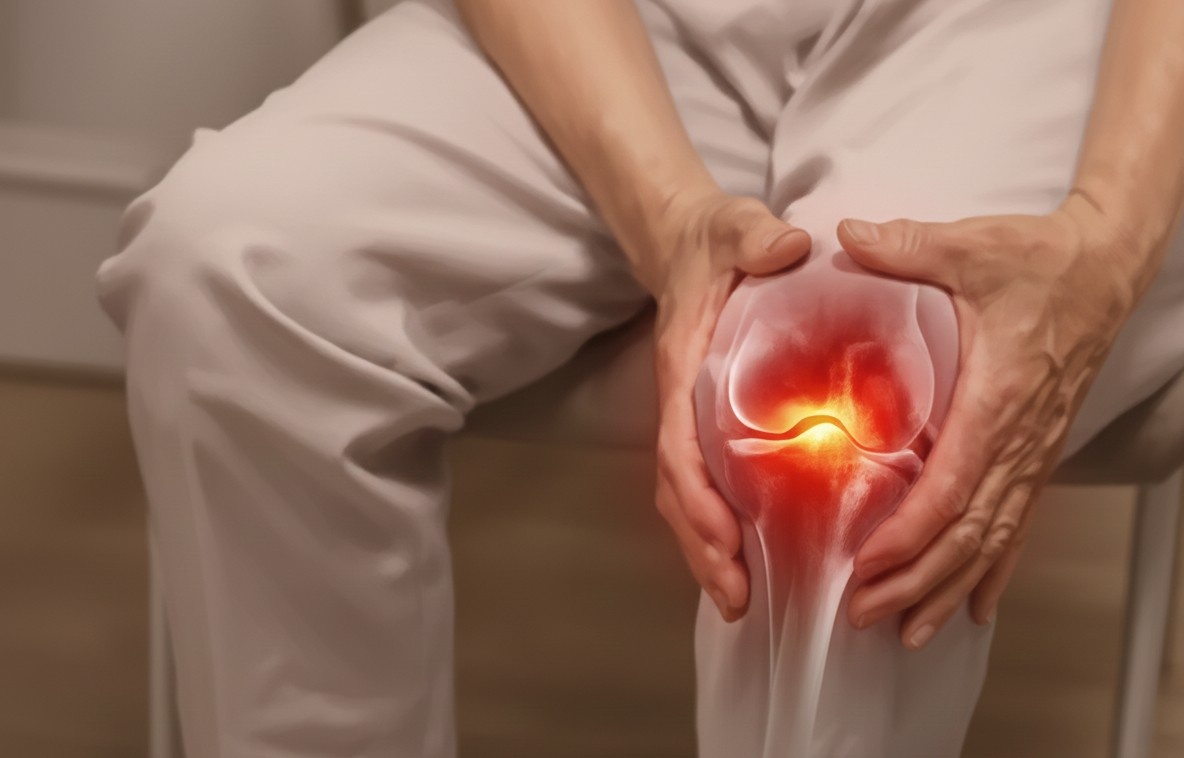
Why Total Knee Replacement Pain Increases at Night
Sleep after knee replacement can be difficult in the early weeks because swelling and healing tissues create added pressure when you lie down.
Night pain is influenced by several natural responses during the early healing period. Patients often notice the following:
- Fewer distractions
During the day, standing, walking, conversations, and general awareness compete with pain signals. At night, when the environment quiets down, the brain focuses more directly on discomfort from the knee. - Higher circulation during rest
Nighttime knee pain after surgery often becomes more noticeable because the body is still, and the nervous system focuses more on internal sensations. When lying flat, blood flow to the surgical area increases. This is helpful for healing, but can heighten swelling and pressure inside the joint. - Stiffness after staying in one position
The knee joint and surrounding muscles tighten when the body remains in a resting position for extended periods. This can make the first movements at night or early morning especially uncomfortable. - Normal nerve recovery
As sensory nerves heal, they may create burning, tingling, or sudden sharp sensations that become more noticeable at night. - Inflammation from therapy or daily activity
Physical therapy and regular walking are essential for recovery. However, both can increase circulation and swelling in the evening, which can contribute to TKA night pain. - Loss of range of motion by bedtime
Soft tissues tighten naturally during the day. Without evening stretches, restriction becomes more apparent once you lie down.
These factors often overlap, which is why postoperative knee pain at night feels different from daytime discomfort.
How Long Does Nighttime Pain Last After Total Knee Replacement?
Recovery is not the same for everyone, but healing follows a similar pattern:
- First two to three weeks:
Night pain is often the severest. Swelling, incision sensitivity, and early movement limitations make sleep challenging. - Weeks three to six:
The range of motion gradually improves. Night pain remains but becomes less constant. - Six to twelve weeks:
Most people experience improved sleep, although occasional soreness is expected. - Three to twelve months:
Healing continues. Nighttime discomfort typically appears only after strenuous days.
Full recovery from total knee arthroplasty can take up to one year, and this timeline is influenced by factors such as age, mobility, and consistency of rehabilitation.
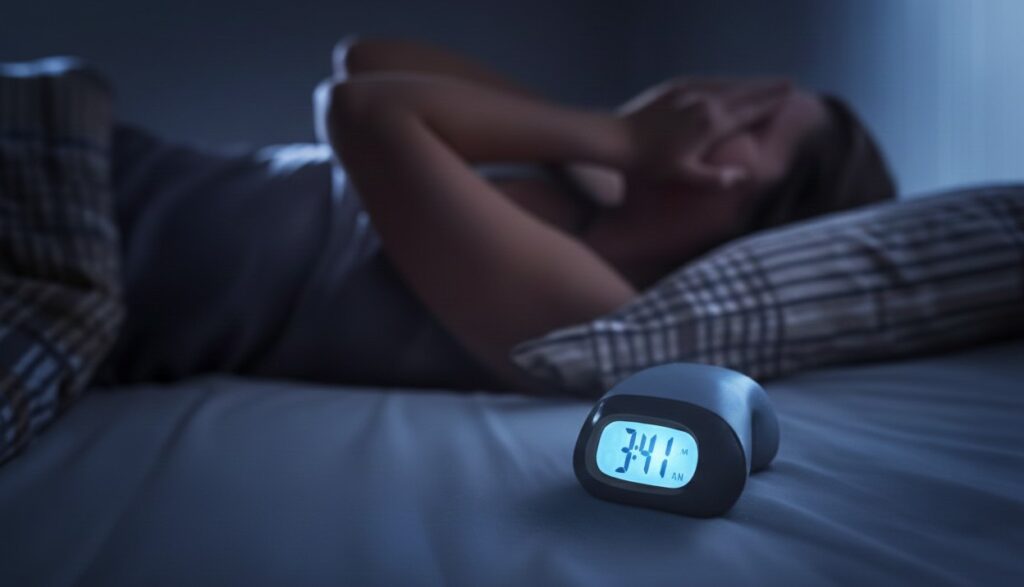
What Is Normal and What Requires Medical Attention
Common, Expected Night Pain
- Stiffness after lying still
- Mild to moderate swelling
- Burning or tingling from nerve recovery
- Tension after physical therapy
- Discomfort that improves with ice, elevation, or medication
Symptoms That Need Medical Review
- Fever, chills, or warmth around the incision
- Drainage or increasing redness
- Sharp calf pain or shortness of breath
- Swelling that worsens suddenly
- A feeling that the knee is unstable or “giving way”
- Pain that consistently worsens rather than improves
These signs may indicate infection, blood clots, or early implant-related issues.
Best Sleep Positions After Knee Replacement
Comfortable positioning helps reduce total knee replacement pain at night. Most surgeons encourage the following:
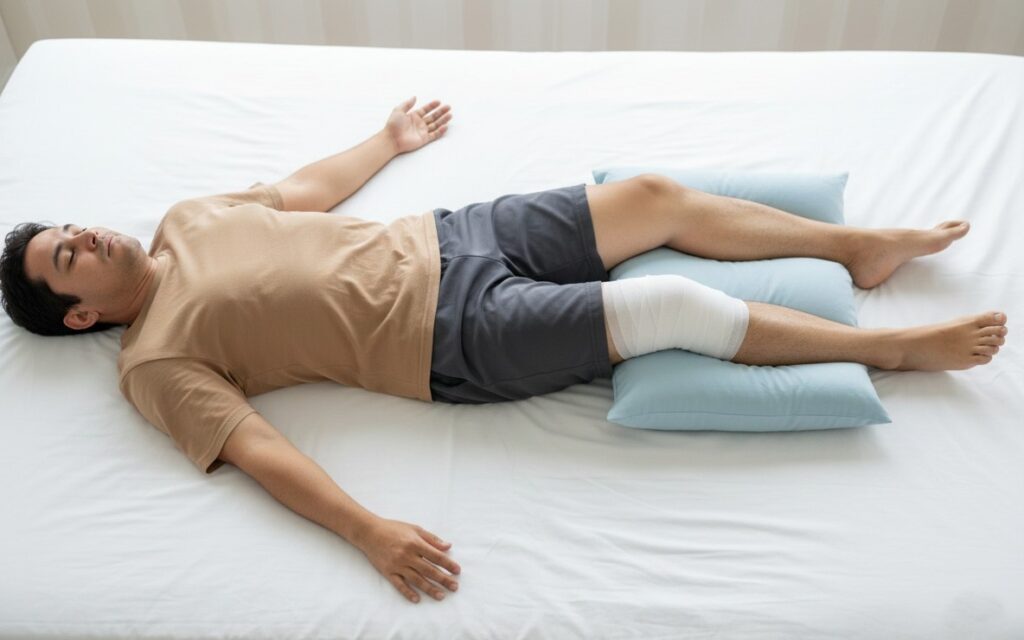
1. Sleeping on Your Back
- Keeps the knee straight
- Improves overall circulation
- Protects the incision
- A long pillow under the calf and ankle prevents pressure behind the knee
2. Sleeping on Your Side
- The operated leg should remain on top
- A pillow between the knees maintains spinal and hip alignment
- Reduces twisting stress on the healing joint
3. Avoid Stomach Sleeping
- Places strain on the spine and knee
- Forces the joint into rotation
Simple Ways to Ease Total Knee Replacement Pain at Night
Several habits can improve sleep and decrease nighttime knee symptoms:
- Apply ice for 15–20 minutes before bed
- Elevate the leg to reduce end-of-day swelling
- Stretch gently in the evening to ease stiffness
- Reduce heavy activity on days when symptoms are intense
- Limit caffeine or large meals late at night
- Take prescribed medication an hour before sleeping
- Use firm pillows for steady alignment
- Keep the room cool to reduce inflammation
- Avoid long daytime naps that disrupt sleep rhythm
How Physical Therapy Helps Reduce Night Pain
Physical therapy plays a central role in improving movement and alleviating nighttime discomfort. A structured program can help by:
- Restoring joint motion
- Preventing excess scar tissue
- Strengthening supporting muscles
- Improving balance and walking mechanics
- Reducing swelling through controlled movement
Therapists may use:
- Manual mobilization
- Ice, compression, or electrical stimulation
- Guided stretching
- Strengthening and balance training
- Functional testing as recovery progresses
It is important to strike a balance. Overworking the knee can increase nighttime swelling, while limited movement can worsen stiffness.
Understanding Nerve Pain After Knee Replacement
Nerve irritation is a common part of recovery. Patients sometimes describe:
- Tingling or burning
- Sudden “spark-like” sensations
- Hypersensitivity when sheets brush the skin
- Electrical discomfort at night
Pain in the back of the knee after total knee arthroplasty at night often comes from stiffness in the hamstrings, postoperative swelling, or limited early range of motion.
These symptoms usually improve between two and six months as the nerves settle.
Why Choose Dr. Mohamed Elfekky for Persistent Night Pain or Difficult Recovery
When nighttime pain continues beyond the expected healing period, a specialist evaluation helps determine the underlying cause.
Dr. Mohamed Elfekky, Consultant Orthopedic Surgeon in Dubai and Director of Tarabichi Joint Care, is widely recognized for his expertise in advanced knee surgery and complex postoperative cases.
What Sets His Practice Apart
- More than 25 years of focused orthopedic experience
- Four international patents in next-generation, ligament-preserving knee arthroplasty
- Extensive proficiency in minimally invasive and robotic-assisted TKA
- A tailored Enhanced Recovery Program designed to reduce postoperative pain
- Strong success in managing revision cases and difficult recoveries
- Known for precision, patient-centered care, and advanced technology
Cryoablation: A Modern Option for Pain Relief
Total knee replacement pain at night can be frustrating, but is expected during the early stages of recovery. With the proper sleep habits, steady physical therapy, and appropriate medical guidance, most patients notice a gradual improvement in comfort and sleep quality.
For those whose symptoms persist or who feel uncertain about their progress, Dr. Mohamed Elfekky offers advanced, patient-centered care, including minimally invasive techniques and cryoablation therapy, to support a safer and more comfortable return to normal movement.
Schedule a consultation with Dr. Mohamed Elfekky to get the clarity and support you need for a stronger, more confident return to daily life.
FAQs About Total Knee Replacement Pain at Night
Why is my knee pain worse at night after replacement?
Healing tissues, nerve activity, and increased nighttime circulation make discomfort more noticeable.
How long does night pain last after TKA?
Many patients experience improvement between 6 and 12 weeks, although occasional soreness may persist for longer.
Is it normal to wake up in pain after a knee replacement?
Yes. More than half of patients report waking due to discomfort during early recovery.
Which positions help me sleep after TKA?
Sleeping on your back or on your side with pillow support is usually most comfortable.
When is night pain a sign of infection or loosening?
Sudden swelling, warmth, fever, redness, or drainage require urgent medical attention.
Can nerve pain cause nighttime discomfort?
Yes. Nerve recovery often causes burning or tingling sensations at night.
Does swelling get worse at the end of the day?
Swelling often increases after activity. It should improve with rest, elevation, and ice.
What helps reduce pain without medication?
Stretching, ice, elevation, alignment pillows, and proper sleep habits.
Does Tylenol help with total knee replacement pain at night?
It may help in mild symptoms, but the dosage must be reviewed with your surgeon.
Is Sprix useful for nighttime TKA pain?
It can be beneficial for certain patients, but only under a surgeon’s supervision.
Is Exparel used for night pain relief?
Exparel is sometimes used during surgery to extend early pain control. For ongoing symptoms, speak with your surgeon.
Why does my knee hurt at night after a replacement?
Night pain usually increases because swelling, healing tissues, and nerve sensitivity become more noticeable when the body is at rest. Without daytime movement to ease stiffness or distract from discomfort, the joint often feels tighter and more sensitive during the night.