
Why do my knees hurt as a teenager? | Causes, symptoms & treatment
It is a common scenario in many households: A busy, athletic teenager suddenly complains, “Why do my knees hurt as a teenager?” While often dismissed as “growing pains,” persistent teenage knee pain can be frustrating, limiting participation in sports and daily activities.
As a specialist dedicated to orthopaedics and pain management, Dr. Mohamed Elfekky understands that when teens ask, “Why did my knees always hurt as a teenager? ” They need a clear answer and a path back to full activity.
The discomfort is real and often points to conditions unique to this age group, driven by rapid physical change and high activity levels.
Here, we will explore the causes of knee pain in teenagers, the common symptoms, and the effective treatment options available.
Is Knee Pain Normal in Teenagers?
Mild knee pain is common during adolescence, especially during growth spurts or increased sports activity. However, pain that persists, worsens, or limits daily activities is not normal and should be evaluated.
The unique factors contributing to knee pain in adolescents
The years of adolescence are defined by two significant factors that directly impact the knee joint: Rapid growth and intense specialization in sports.
1. The growth spurt and biomechanics
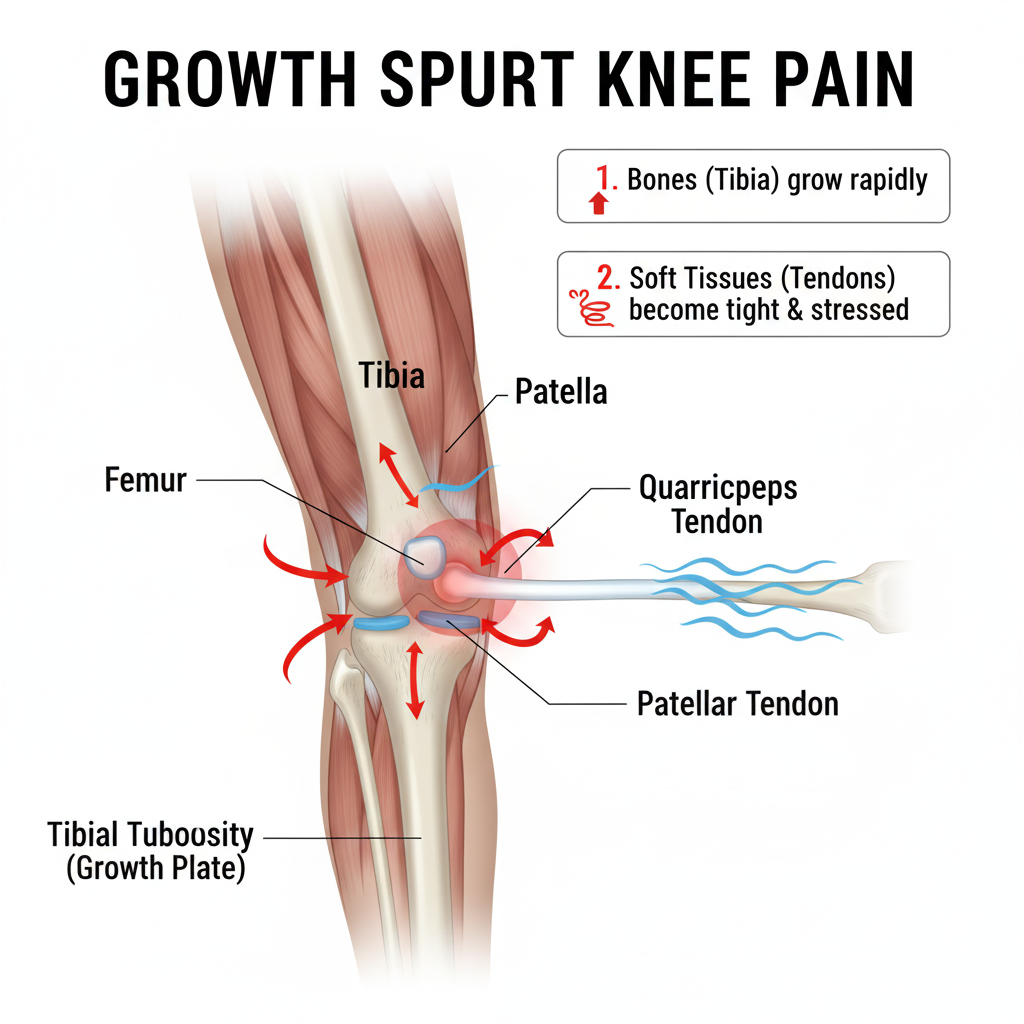
During a growth spurt, knee pain often emerges because bones grow faster than the surrounding soft tissues (muscles, tendons, and ligaments).
This uneven growth creates tightness and tension, pulling disproportionately on the points where tendons attach to bone, making these areas highly susceptible to inflammation and injury.
2. High activity and repetitive stress
Many teens participate in year-round competitive sports, subjecting their knees to repetitive impact.
Overuse, combined with poor technique or muscular imbalances, causes micro-trauma to the joint structures, which the body struggles to heal due to continuous activity.
Most Common Causes of Knee Pain in Teenagers (The big three)
While serious injuries like ligament tears (ACL) can occur, most instances of teenage knee pain fall into one of these three overuse categories:
1. Patellofemoral pain syndrome teen (PFP)
Also known as Runner’s Knee, PFP is the most frequent culprit behind anterior knee pain in teens.
What it is: Pain that originates around or behind the kneecap (patella). It results from the patella tracking improperly in its groove, usually due to muscular imbalances (weak hips or tight hamstrings) or overuse.
Symptoms: A dull, aching pain often worse after sitting for long periods (the “movie theatre sign”) or when climbing stairs, running, or squatting.
2. Osgood-Schlatter disease teenagers
This condition is strongly associated with growth spurt, knee pain, and athletic activity.
What it is: Inflammation of the patellar tendon where it attaches to the tibial tuberosity (the bony bump below the kneecap). Rapid growth, combined with the strong pull of the thigh muscles (quadriceps) during sports like basketball or soccer, causes the tendon to stress the growth plate.
Symptoms: Localized pain, swelling, and tenderness directly over the bony bump below the kneecap. The bump itself may become permanently enlarged.
3. Patellar tendinitis (Jumper’s knee)
Similar to Osgood-Schlatter but typically affecting the tendon or the area just above the bony bump, this is common in jumping sports.
What it is: Repetitive stress leads to inflammation or degeneration of the patellar tendon.
Symptoms: Pain that is sharp initially and becomes dull, localized directly on the patellar tendon.
Knee pain treatment for teenagers and advanced management
Most knee pain in adolescents is treatable non-surgically, focusing on rest, rehabilitation, and addressing the underlying biomechanics. Initial conservative treatment (RICE & Rehab):
1- Rest & activity modification: Temporarily reduce or eliminate activities that aggravate pain.
2- Ice: Apply ice to the inflamed area after activity.
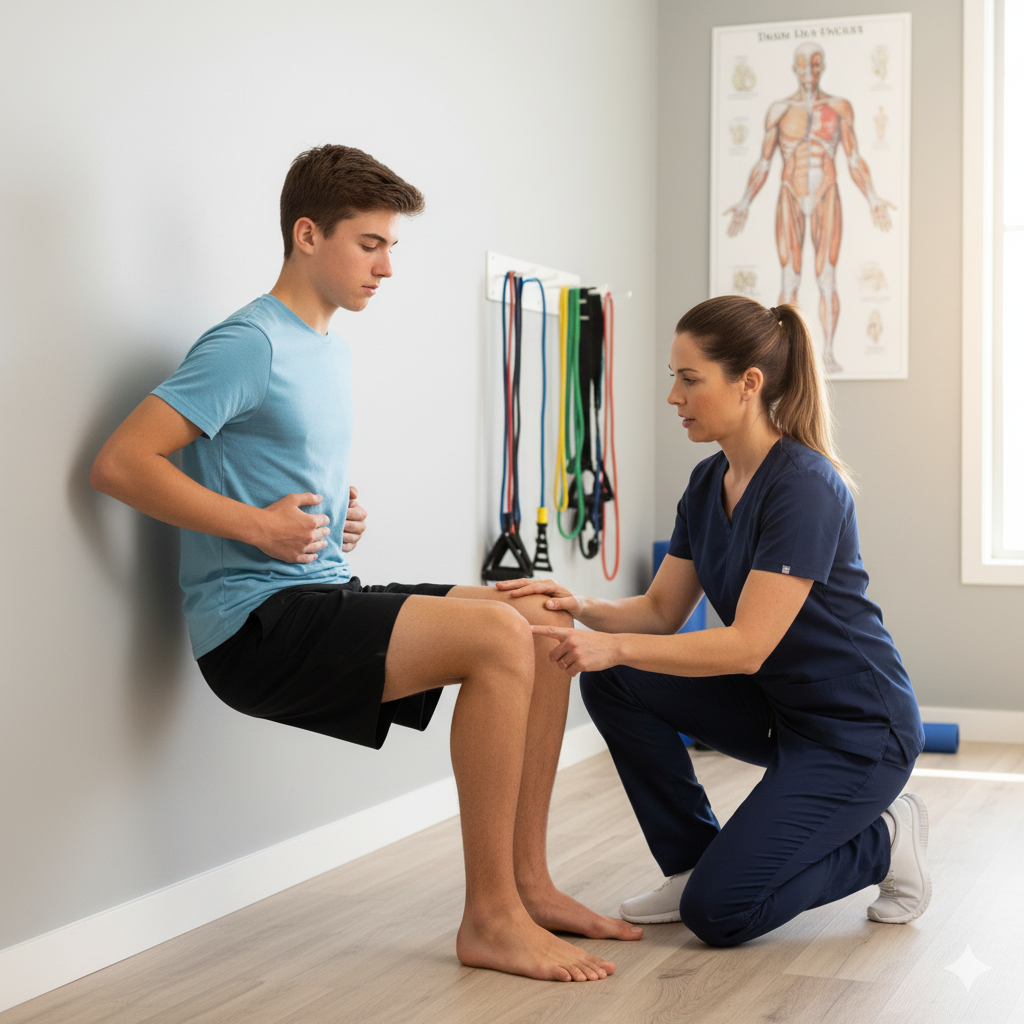
3- Physical therapy: Strengthening the quadriceps, hips, and core, and improving flexibility (especially hamstring and calf stretching).
4- Orthotics/Bracing: Custom shoe inserts or knee braces to help correct alignment issues.
FAQs :
Why do my knees hurt as a teenager?
The most common reasons are overuse injuries like Patellofemoral pain syndrome or Osgood-Schlatter disease, often triggered by growth spurts combined with intense sports activity.
Is it normal for teenagers to have knee pain every day?
No. While occasional pain is common, pain that occurs daily and limits activity is not normal and should be evaluated by a specialist.
What are the most common causes of teenage knee pain?
Patellofemoral Pain Syndrome (PFP), Osgood-Schlatter Disease, and Jumper’s Knee (Patellar Tendinitis).
How can I relieve knee pain as a teenager?
Rest, ice, and gentle stretching provide initial relief. Long-term relief requires physical therapy to correct muscle imbalances.
When should a teenager see a doctor for knee pain?
See a doctor if the pain is severe, if there is visible swelling, if the pain limits daily activities or sports, or if conservative treatments fail after several weeks.
Can knee pain during puberty go away on its own?
Conditions like Osgood-Schlatter disease are self-limiting, meaning they usually resolve once the growth spurt ends, but symptoms can persist for months or even a year without management.
Does sports activity make teenage knee pain worse?
Continued high-impact activity without proper rest or correction of biomechanical issues often aggravates overuse injuries. Activity should be modified until the pain is controlled.
Can poor posture cause knee pain in teenagers?
Yes. Poor posture, particularly relating to the hips, feet, and core stability, affects the alignment of the legs, which can lead to improper tracking of the kneecap and cause pain.
What treatments are available for chronic knee pain in teens?
Treatments include physical therapy, custom orthotics, activity modification, anti-inflammatory medications, and, for persistent cases, advanced options like Cryoablation therapy.
How does cryoablation therapy help with persistent knee pain?
Cryoablation is a non-surgical technique that uses extreme cold to safely interrupt the specific nerves responsible for transmitting chronic pain signals, providing long-lasting relief from persistent discomfort.
Advanced pain management by Dr. Mohamed Elfekky
For teens or adults experiencing persistent knee pain that does not respond to conservative therapies—especially chronic anterior or joint pain— Dr. Mohamed Elfekky offers cryoablation treatment.
This innovative, non-surgical option helps relieve pain by safely freezing the nerves responsible for discomfort. This technique can provide long-lasting pain relief without steroids or medication, allowing the patient to participate in physical therapy and rehabilitation fully.
If your child’s knee pain persists despite rest and physical therapy, it is time to seek expert orthopaedic advice. Early, accurate diagnosis is the most effective way to ensure a quick return to a healthy, active lifestyle.
Book your consultation with Dr. Mohamed Elfekky today to determine the cause of your teenage knee pain and discuss a tailored treatment plan.