

Why Is There So Much Pain After Knee Replacement? Causes & Recovery
Experiencing intense pain after total or partial knee replacement is a valid concern, especially when expecting a pain-free life ahead. While slight discomfort is normal during the healing process, many patients wonder, “Why is there so much pain after knee replacement?”
Understanding the difference between expected postoperative soreness and persistent pain after knee replacement can help you heal more confidently.
In this blog, we understand the common causes of severe pain after knee replacement and how advanced surgical techniques, especially those performed by Dr. Mohamed Elfekky, the best knee surgeon in Dubai, can significantly improve recovery outcomes.
Why is there so much pain after Knee Replacement? A quick overview
A knee replacement is a significant procedure that involves resurfacing the bone, adjusting the ligaments, and implanting artificial components. After the surgery, the body naturally responds with inflammation, swelling, and stiffness. This is considered normal pain after knee replacement, especially during the first few weeks.
However, patients sometimes experience discomfort beyond the typical healing period, such as sharp pain after knee replacement, pain behind the knee after knee replacement, or persistent knee replacement pain after 3 months. These symptoms may indicate issues that require evaluation.
Did you know? Studies show that up to 20% of patients report ongoing discomfort after knee replacement, but most causes are treatable when identified early. |
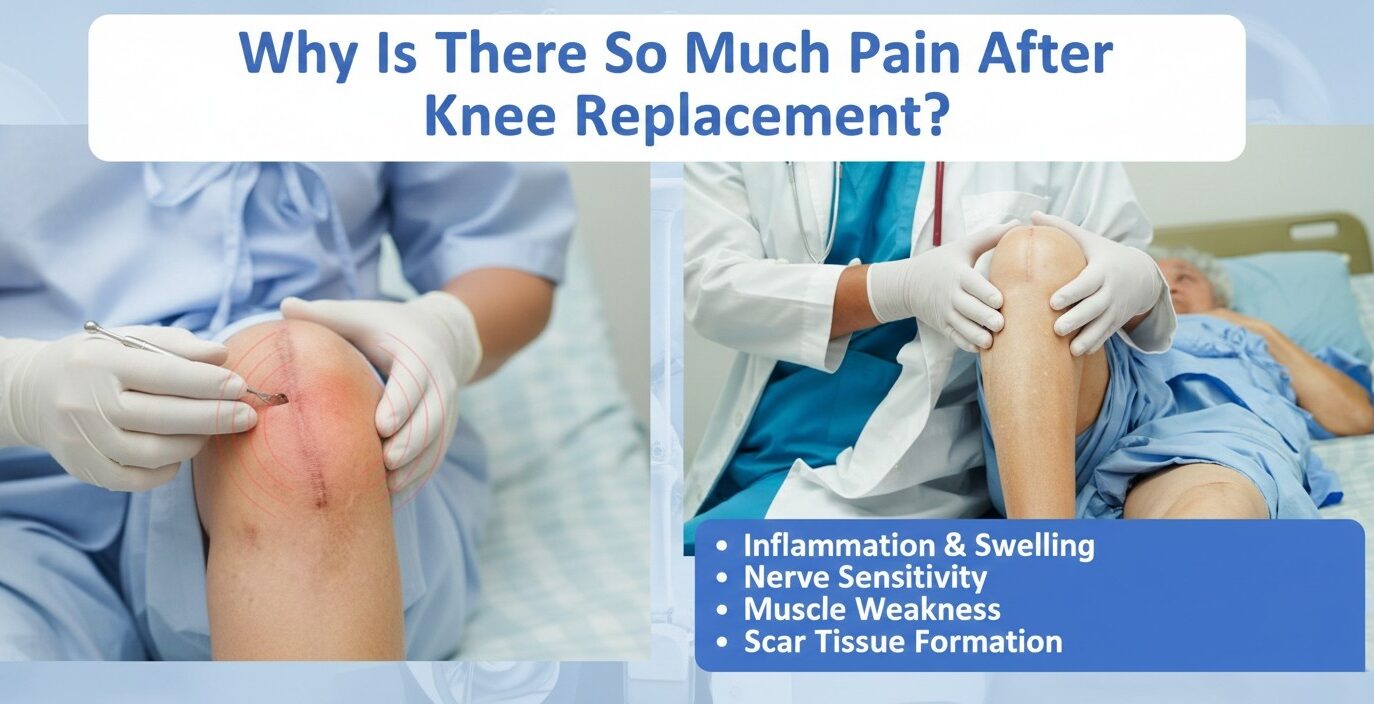
What are the most common causes of pain after Knee Replacement?
1. Inflammation & swelling
Inflammation is one of the leading causes of knee replacement swelling and pain. Fluid collects around the joint as part of the natural healing process, sometimes causing intense pressure.
Swelling may increase toward the end of the day or after long periods of standing.
2. Overactivity or underactivity
Doing too much too soon can trigger severe pain after knee replacement, but doing too little can also lead to stiffness and weakness.
The right balance is essential, structured physiotherapy prevents stiffness, muscle imbalance, and scar tissue formation.
3. Implant positioning issues
Poor alignment can cause:
- Pain walking after knee replacement
- Persistent pain after knee replacement
- Difficulty bearing weight
This is a critical reason why many patients today prefer surgeons with advanced imaging, 3D planning, and robotic-assisted systems, techniques used by Dr. Mohamed Elfekky, known for precision-based knee surgery in Dubai.
4. Infection (rare but serious)
Infections are rare, consult your surgeon if you experience high fever, hot and painful swelling, increased redness, and drainage from the incision.
Such warning signs require immediate medical attention.
5. Nerve or soft tissue pain
Some patients experience:
- Sharp pain after knee replacement
- Burning or tingling
- Pain behind the knee
This often improves over time but may require targeted therapy.
6. Scar tissue formation (Arthrofibrosis)
Scar tissue can lead to:
- Stiffness
- Limited range of motion
- Difficulty bending the knee
This is a common reason patients ask, “Why is my knee still stiff after knee replacement?” Early movement, guided by physical therapy, often prevents this issue.
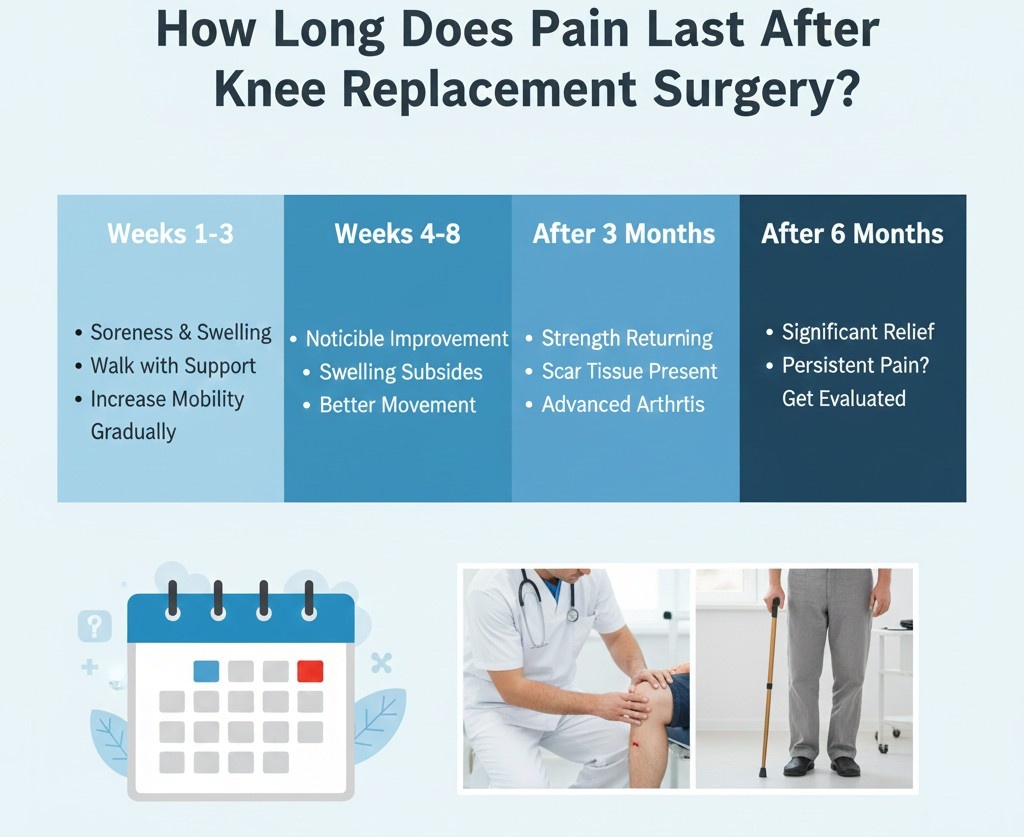
How long does pain last after Knee Replacement surgery?
While healing differs for every individual, most patients follow this general timeline:
In weeks 1–3
- You can expect soreness and swelling.
- Try to walk with support.
- Increase mobility gradually
In weeks 4–8
- You’ll find noticeable improvement in strength
- Swelling subsides gradually
- Ensure better movement
After 3 Months
Some may still report knee replacement pain after 3 months, particularly when:
- Strength is still returning
- Presence of scar tissue
- The patient had advanced arthritis beforehand.
After 6 Months
Most patients experience significant relief, but some ask:
“Is pain normal 6 months after knee replacement?” It can be, especially if healing was slow, but persistent pain should be evaluated.
Why some patients experience more pain: the surgical technique matters
Precision, implant choice, and surgical methods have a major impact on recovery.
This is where the expertise of Dr. Mohamed Elfekky, one of the best orthopedic doctor in Dubai and a globally recognized knee specialist, stands out.
With over 25 years of experience and four international patents, he utilizes advanced technologies to reduce postoperative discomfort and enhance long-term outcomes significantly.
Dr. Elfekky’s enhanced recovery advantage: faster, less painful healing
Patients under his Enhanced Recovery Program experience:
- Up to 50% less pain post-surgery
- Faster return to daily activities
- Minimal scarring
- Shorter hospital stays
His approach to reducing knee replacement pain includes:
- Gentle tissue handling
- Precise implant positioning
- Early mobility protocols
- Personalized pain management
- Cryoablation therapy for patients who aren’t surgical candidates
This makes him a preferred choice for those seeking the best knee doctor in Dubai or a trusted knee specialist in Dubai.
Advanced relief option: Dr. Elfekky’s expertise in Knee Cryoablation
Cryoablation targets sensory nerves using controlled cold energy to reduce chronic knee pain. Dr. Mohamed Elfekky is known for his precision-guided technique, offering safe and effective relief.
- Helpful for patients with persistent pain after replacement or those unable to undergo further surgery.
- Performed as a quick outpatient procedure with no surgical recovery period.
- Many patients notice rapid improvement in comfort and mobility.
- Long-lasting relief makes it a valuable option for select cases.
Tips to reduce pain after Knee Replacement
Here’s what you can do to support smoother recovery:
- Stay consistent with physiotherapy
Mobility prevents stiffness and enhances long-term function.
- Manage swelling
Use:
- Ice packs
- Elevation
- Compression
- Take medications as prescribed
Anti-inflammatories and nerve pain medications may help.
- Avoid overloading the joint
Increase activity gradually to avoid setbacks.
- Follow-Up with surgeon
If pain worsens after knee replacement, early assessment can help prevent long-term issues.
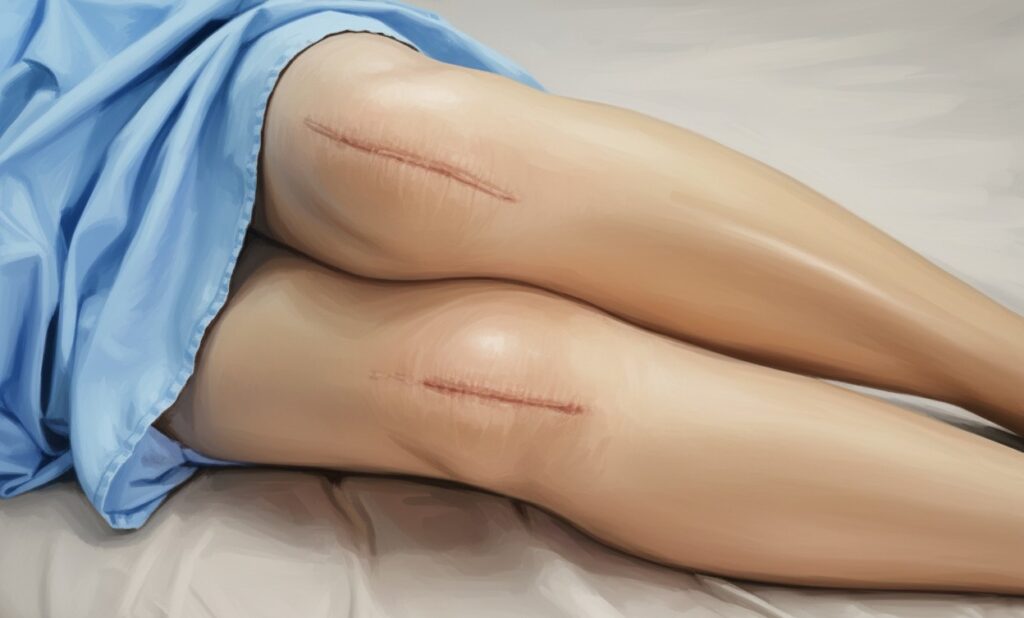
When Knee Replacement pain doesn’t go away
If you’re wondering, “What to do when knee replacement pain doesn’t go away?”, it’s essential to get evaluated by an experienced knee specialist.
Chronic pain may be caused by:
- Implant loosening
- Alignment problems
- Persistent inflammation
- Scar tissue buildup
Dr. Elfekky specializes in revision knee surgery, ligament reconstruction, and personalized recovery plans to restore comfort and mobility.
Heal better with precision, innovation & expert Knee care
Pain after knee replacement is common, but it shouldn’t hold you back from living your life. With the right guidance, modern techniques, and evidence-based recovery strategies, healing becomes quicker, smoother, and far less painful.
If you’re concerned about ongoing discomfort, expert evaluation makes all the difference.
Book your consultation with Dr. Mohamed Elfekky!
FAQs: quick answers you need
Why does my knee hurt so much after knee replacement?
Because the body is healing from major surgery, tissue inflammation, swelling, and bone adjustments all contribute to pain.
What is the most common cause of pain after knee replacement?
Inflammation, surgical trauma, stiffness, or improper implant positioning.
How long does pain last after knee replacement surgery?
Most patients experience improvement within 3 months, although mild discomfort may persist for 6–12 months.
Why is my knee still stiff after knee replacement?
Scar tissue, swelling, or underactive muscles can limit flexibility.
Is pain normal 6 months after knee replacement?
It can be, but persistent or worsening pain should be evaluated.
Is it normal to feel pain behind the knee after knee replacement?
Yes, some patients experience pain behind the knee after knee replacement due to soft-tissue healing or muscle tightness. However, persistent or worsening pain should be evaluated by your specialist.
Why is my pain getting worse after knee replacement?
Pain getting worse after knee replacement may indicate inflammation, implant-related issues, or incomplete rehabilitation. A proper clinical assessment helps determine the exact cause.
What causes pain at night after knee replacement?
Pain at night after knee replacement is commonly linked to swelling or overactivity during the day. Adjusting your activity levels and following your physiotherapy plan can often improve symptoms.
About Doctors
Dr Mohamed Elfekky, Orthopedic Surgeon in Dubai, is a trusted expert in knee and joint care with over 25 years of experience in advanced, minimally invasive, and robotic-assisted surgeries. Read more
Social link
Recent Blog

Sudden Knee Pain: Causes, Symptoms & When It’s Serious
Sudden Knee Pain: Causes, Symptoms & When It’s Serious Experiencing

Knee Pain in Ladies: Causes, Symptoms & Treatment Guide
Knee Pain in Ladies: Causes, Symptoms & Treatment Guide Knee
